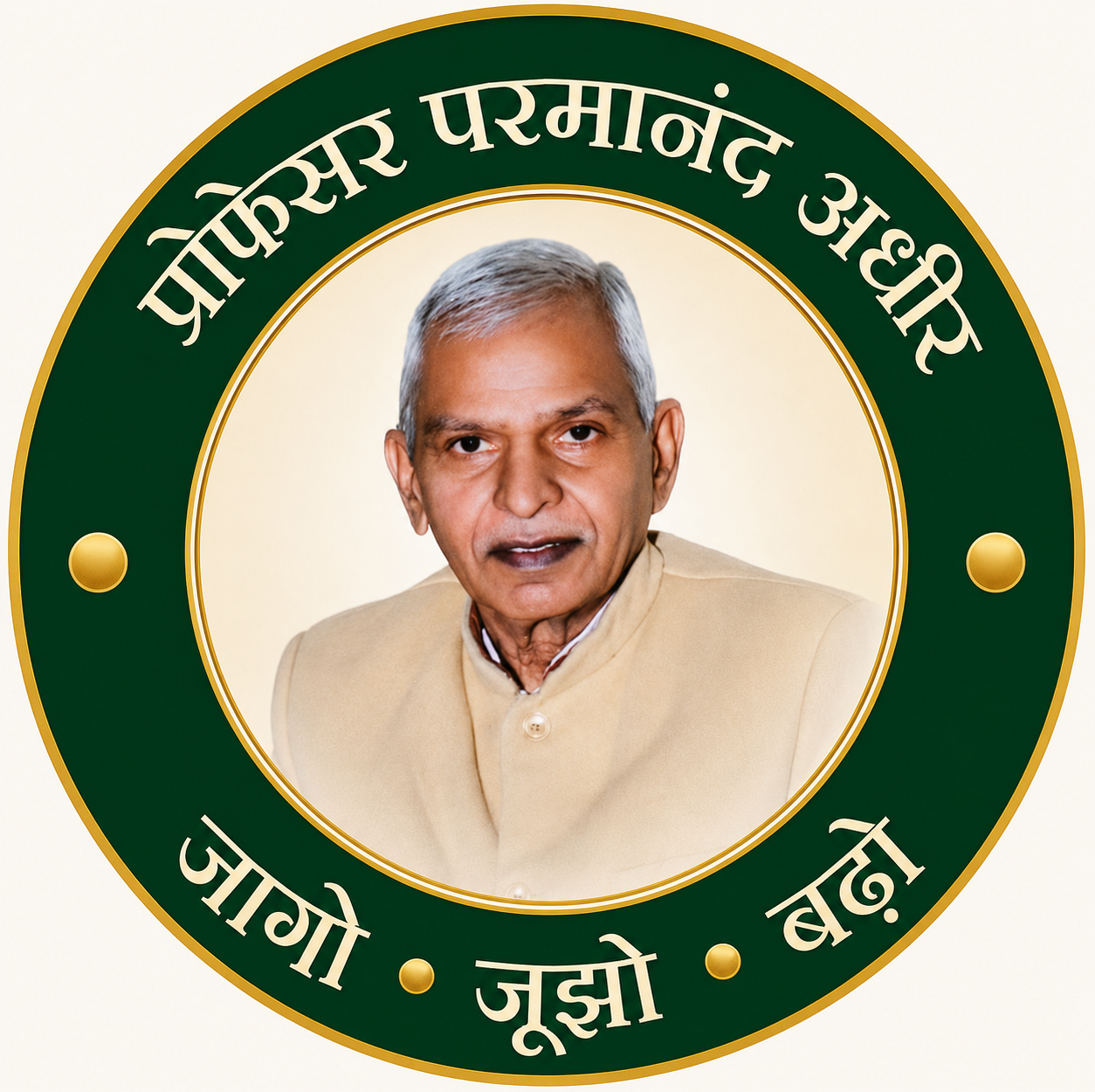
The Haryana Second Backward Classes Commission was a state-level body constituted on 12 October 1993 to examine requests for inclusion, over-inclusion and under-inclusion of castes in Haryana’s Backward Classes list. Chaired by Des Raj Kamboj, it recommended raising BC reservation to 27%, adding four new castes, and splitting the list into Block A and Block B, the structure Haryana still uses today.
The Commission was set up in direct compliance with the Supreme Court’s Indira Sawhney v. Union of India judgment of 16 November 1992, which directed every state to create a permanent body for reviewing OBC lists. Its report, signed on 24 February 1995, is the single most consequential document behind Haryana’s present-day BC-A and BC-B categories.
This article summarises the Commission’s composition, methodology, statistical findings and complete recommendations, based on the original report text.
Table of Contents
- What Is the Haryana Second Backward Classes Commission?
- Who Were the Members of the Commission?
- Why Was the Commission Constituted?
- What Work Did the Commission Actually Do?
- Key Recommendations of the Report
- Synonymous Caste Names Recommended for Addition
- What Happened After the Report Was Submitted?
- Frequently Asked Questions
What Is the Haryana Second Backward Classes Commission?
The Haryana Second Backward Classes Commission was constituted by the Governor of Haryana vide Notification No. 2320-SW(1)/93 dated 12 October 1993, issued by the Welfare of Scheduled Castes and Backward Classes Department. It was Haryana’s second such body, following the Gurnam Singh Commission (constituted 7 September 1990), whose report of 30 December 1990 was never implemented.
Its headquarters were at Chandigarh. Its initial term was one year, later extended to 11 October 1995 vide notification dated 27 October 1994. Critically, the constituting notification stated that the Commission’s advice “shall ordinarily be binding upon the State Government.”
Who Were the Members of the Commission?
The Commission had a chairman, two members and a secretary. Its composition changed within four months of formation, as the table below shows.
| Role | Name | Status |
| Chairman (first) | Sh. Ramji Lal, Ex-M.P., Arya Nagar, Hisar | Resigned w.e.f. 14 January 1994 |
| Chairman (second) | Sh. Des Raj Kamboj, Advocate, Ex-M.L.A. & Ex-Minister, Karnal | Appointed 8 February 1994; signed the report |
| Member | Prof. Parma Nand, Ex-Manister., Ahirka, Jind | Signed the report |
| Member | Sh. Jai Narayan Verma, Ex-M.L.A., Hisar | Signed the report |
| Secretary | Director, Welfare of SC & BC Department (Joint Secretary rank) | Ex-officio |
Des Raj Kamboj was first nominated as an additional member on 31 December 1993, then elevated to Chairman on 8 February 1994 after Ramji Lal’s resignation. The report acknowledges Smt. Veena Eagleton, IAS (Commissioner & Secretary) and Sh. D.S. Dhesi, IAS (Director) for their support.
Why Was the Commission Constituted?
The Commission exists because of a Supreme Court order. In Indira Sawhney & Others vs Union of India (AIR 1993 SC 477), decided 16 November 1992, the Court directed the Centre, all State Governments and Union Territory administrations to constitute a permanent body to entertain, examine and recommend on requests for inclusion and complaints of over-inclusion and under-inclusion in OBC lists.
Haryana’s constituting notification cites this directive verbatim. A second function was added on 26 May 1994: the Commission was also required to specify the socio-economic basis for excluding the “creamy layer” socially advanced persons and sections from Other Backward Classes.
What Work Did the Commission Actually Do?
The Commission followed a five-point methodology and collected 302 representations in total. Its process combined desk review of earlier commission data with direct public hearings across the state.
Public consultation and field tours
- Published a public notice on 27 June 1994 in newspapers inviting suggestions within one month
- Extended the deadline by three weeks vide notice dated 12 August 1994
- Received 110 representations by post
- Conducted field tours of all district headquarters plus Panchkula, receiving a further 192 representations in person
- Heard social workers, educationists, politicians, political workers, caste associations and individuals
Methodology adopted
The Commission relied heavily on the Mandal Commission list for Haryana, describing it as a comprehensive list prepared after extensive touring, interviews and field surveys. It noted an anomaly: several castes appearing in the Mandal list for Haryana were absent from Haryana’s own existing BC list. It therefore restricted its positive recommendations to castes that already figured in the Mandal list, deferring castes outside that list pending further data on their social and educational status.
Population findings
The Commission collected district-wise population figures from Deputy Commissioners and Local Bodies Departments. Against an estimated state population of 1,67,52,600, the BC population on the existing list came to 26,35,999, just 15.04%.
The Commission rejected this as an undercount. It reasoned that Keshdhari members of Kamboj, Kumhar and Rai Sikh communities were being counted as Sikhs, while Mohammedan Kumhar, Teli, Dhobi, Chhipi, Lohar, Lakhera and Nai were being counted as Muslims. Its position was unambiguous: the criterion for backwardness is caste, not religion.
Applying this correction, the Commission estimated:
- Existing Backward Classes: more than 19%
- Newly recommended castes: more than 10%
- Combined BC population: more than 29%
Key Recommendations of the Report
The Haryana Second Backward Classes Commission made eight substantive recommendations. These are the operative core of the report.
1. Include four new castes in the Backward Classes list. Each was assessed as socially and educationally backward and inadequately represented in state services:
| Caste | Estimated share of state population | Commission’s reasoning |
| Ahir / Yadav | More than 5% | Concentrated in dry, unirrigated southern Haryana; petty farmers and cattle breeders |
| Gujjar | About 2.5% | Reside in hilly and southern tracts; poor and inadequately represented in services |
| Lodh / Lodha | Small community | Ambala, Karnal, Kurukshetra, Panipat, Sonepat; mostly landless farmers and small shopkeepers |
| Saini | About 2.5% | Peri-urban; land acquired by government or colonisers; now cultivate green fodder and vegetables |
2. Raise reservation to 27%. The Commission recommended increasing reservation in jobs and services for Backward Classes to 27%, and in a handwritten addition to the signed text extending the same percentage to admissions in educational, vocational and technical courses.
3. Create Block A and Block B. To protect existing beneficiaries from displacement, the Commission recommended splitting the list into two schedules: Block A comprising the 67 existing castes, and Block B comprising the 4 newly recommended castes.
4. Earmark quotas separately. Of the 27%, the Commission recommended 19% for Block A and 8% for Block B, the first formal proposal for sub-categorisation within Haryana’s OBC quota.
5. Approach the Centre. The State Government should petition the Central Government to include the newly recommended castes in the Central List of OBCs for central jobs and educational admissions.
Synonymous Caste Names Recommended for Addition
The Commission’s eighth recommendation addressed a practical administrative problem: communities were being denied certificates because their locally-used name did not appear in the official list. It recommended adding these synonyms alongside the existing entries.
| Existing caste in list | Synonyms recommended for addition |
| Hajjam, Nai | Sain |
| Jhangra-Brahman, Khati | Suthar, Dhiman, Tarkhan, Barhai, Baddi |
| Dhimar, Mallah, Kashyap-Rajpoot, Kahar, Jhiwar, Dhinwar | Khewat, Mehra, Nishad |
| Sunar | Zargar, Soni |
| Lohar | Panchal |
| Kumhar | Prajapati |
| Chimba, Chhippi, Chimpa, Darzi | Rohilla |
| Gadaria | Pal |
| Jogi-Nath | Jogi, Nath, Jangam-Jogi |
What Happened After the Report Was Submitted?
Unlike the Gurnam Singh Commission report before it, this report was acted upon. The Haryana Government issued Notification No. 1170-SW(1)-95 dated 7 June 1995, providing 27% reservation for Backward Classes and formally adopting the Block A / Block B architecture.
The government modified the split, however. Instead of the recommended 19:8 ratio, it notified 16% for Block A (67 castes) and 11% for Block B, and Block B was expanded from the recommended four castes to six.
As of 2026, this framework remains intact. Haryana’s Backward Classes are still classified as BC-A and BC-B, and the split now underpins reservation not only in services and education but also in Panchayati Raj Institutions and municipalities, following Haryana Backward Classes Commission recommendations implemented in 2022 (BC-A) and 2024 (BC-B). In June 2025, the state raised BC reservation in Group A and B posts from 15% to 27%.
Frequently Asked Questions
Who was the chairman of the Haryana Second Backward Classes Commission? Sh. Des Raj Kamboj, an advocate, former MLA and former minister from Karnal, chaired the Commission and signed its report. He replaced the first chairman, Sh. Ramji Lal, Ex-M.P., who resigned with effect from 14 January 1994. Kamboj had initially joined as an additional member on 31 December 1993 before being appointed chairman on 8 February 1994.
When was the Haryana Second Backward Classes Commission report submitted? The report was signed by the chairman and both members on 24 February 1995. The Commission was constituted on 12 October 1993 with a one-year term, later extended to 11 October 1995. Its recommendations were implemented by the Haryana Government through a notification dated 7 June 1995.
Which castes did the Commission recommend for inclusion? Four: Ahir/Yadav, Gujjar, Lodh/Lodha and Saini. The Commission considered only castes that already appeared in the Mandal Commission’s list for Haryana, and found each of these four to be socially and educationally backward as well as inadequately represented in state services.
What is the difference between BC-A and BC-B in Haryana? Block A comprises the 67 castes already on Haryana’s Backward Classes list before 1995. Block B comprises the castes added following this Commission’s report. The split was created so that newly included, relatively larger communities would not crowd out the existing beneficiaries; each block receives a separately earmarked share of the 27% quota.
Did the Commission address the creamy layer? Yes, in the mandate. A notification dated 26 May 1994 added the function of specifying socio-economic criteria to exclude socially advanced persons and sections of the creamy layer from Other Backward Classes, following the Indira Sawhney judgment.
What was the estimated Backward Classes population in Haryana? Official district data placed the existing BC population at 15.04% (26,35,999 of 1,67,52,600). The Commission judged this an undercount because Keshdhari and Muslim members of backward castes were being classified by religion rather than caste, and estimated the true combined figure at over 29%.
Conclusion
The Haryana Second Backward Classes Commission report is short in length but structural in consequence. It converted a Supreme Court directive into a working state framework, corrected a religion-driven undercount of backward caste populations, and introduced sub-categorisation Block A and Block B years before the idea gained national traction.
For researchers, policy analysts and BC certificate applicants, three takeaways matter most: the 27% recommendation, the four caste inclusions, and the synonym additions that determine whether a family’s caste name appears on an official list at all. If you are tracking Haryana’s current reservation position, read this report alongside the Haryana Backward Classes (Reservation in Services and Admission in Educational Institutions) Act, 2016, and the subsequent Haryana Backward Classes Commission reports on political reservation.