Prof. Parmannand “Adhir” was a remarkable personality whose life embodied integrity, intellect, compassion, and unwavering commitment to social justice. Born on 7th October 1939 in the small village of Ahirka in Jind, Haryana, he emerged from humble beginnings to become a respected teacher, politician, and distinguished literary figure. His life, spanning over seven decades, serves as a testament to the power of perseverance, moral courage, and the transformative potential of education and literature.
Early Life and Family Background
Parmannand was born into a simple farming family. His father, Shri Motiram, owned about fifty bighas of land and was known not only for his hard work as a farmer but also for his social engagement and strength as a community leader. From a young age, Parmannand was exposed to the values of self-respect, discipline, and resilience. His mother, Dahi Devi, was a devout and religious woman who instilled in him the principles of service, compassion, and ethical living.
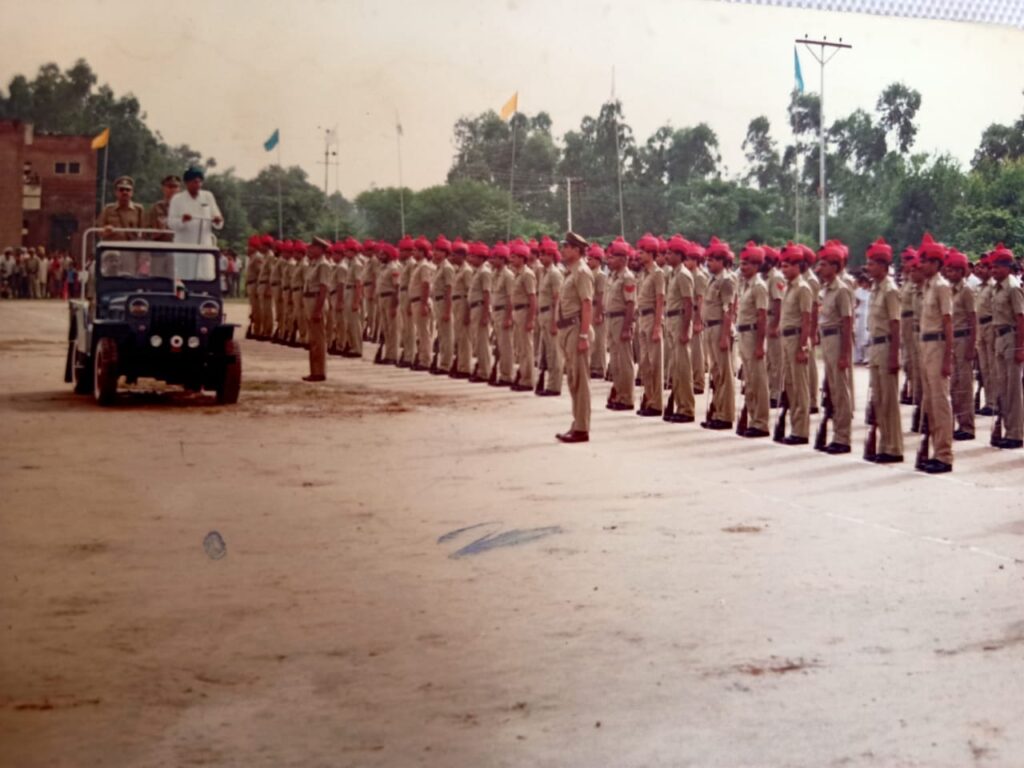
Growing up, Parmannand showed extraordinary curiosity and intelligence. Before entering formal schooling at the age of ten, he spent three years tending to livestock, absorbing the rhythms of rural life and learning the values of patience and responsibility. Early influences, particularly the reformist teachings of the Arya Samaj, guided him toward social awareness and moral clarity. Parmannand’s childhood was also marked by a love for music; he enjoyed playing the flute and other instruments, cultivating a sensitivity to art and expression that would later inform his literary career.
Education and Early Academic Achievements
Despite limited resources, Parmannand’s intellectual abilities and tireless determination enabled him to excel academically. By the age of seventeen and a half, he had completed his 10th grade, demonstrating not only sharp intellect but also an exceptional memory and remarkable perseverance. While excelling in academics, he actively participated in sports such as football and kabaddi, and emerged victorious in multiple debate competitions. His leadership skills became evident early on when he was elected President of the Student Council at Jat High School, Jind.
Financial constraints prevented him from pursuing immediate college education. Nevertheless, Parmannand’s passion for learning remained undiminished. He undertook a one-year teacher training course and joined government service as a teacher, where he taught for ten years and earned widespread respect for his pedagogical excellence. During this time, he continued his higher studies independently, completing Prabhakar, F.A., and B.A. degrees as a private student. Eventually, he earned an M.A. in English from Punjab University, Chandigarh, exemplifying his relentless pursuit of knowledge despite personal and financial challenges.
Founding of a College and Early Social Engagement
In 1966, Parmannand resigned from government service and established a degree college in Jind, where he successfully ran F.A. and B.A. classes for eleven years. This initiative reflected his deep commitment to education and social upliftment. Around the same time, he began engaging more actively in social and political work, focusing particularly on the welfare of backward classes, farmers, and marginalized communities.
Political Career
Parmannand’s political philosophy was grounded in principled, people-centered service. He believed that politics should be a tool for social good rather than personal gain. Throughout his career, he rejected flattery and self-interest, consistently prioritizing justice, fairness, and empowerment for the underprivileged. His integrity was widely recognized, and even political opponents never accused him of corruption or compromise.
- 1966–1970: Parmannand joined the Socialist Party and quickly became the District General Secretary. He actively participated in political movements, including a significant protest regarding Chandigarh, which led to his imprisonment in Hisar.
- 1971–1980: He played a central role in the formation of the Indian Lok Dal, aligning with leaders like Chaudhary Charan Singh. He actively participated in farmers’ movements and faced arrest for his involvement. During this period, he also joined the Janata Party and served as a delegate in its formation conference.
- 1981–1985: Parmannand focused on organizational work within the Lok Dal and actively contributed to Chaudhary Devi Lal’s Justice Movement, organizing training camps for workers across 46 assembly constituencies.
- 1987–1989: Elected MLA from Jind, he served as a Cabinet Minister in Haryana, handling departments including Public Works, Education, Food & Supplies, and Forests. He tirelessly advocated for backward classes, farmers, and marginalized groups.
- 1989–1995: He continued leading movements supporting reservation policies, organizing pro-reservation rallies in Hisar, Sirsa, and Fatehabad. He contested the 1991 parliamentary elections but was unsuccessful. Later, due to political disagreements and organizational challenges, he joined Congress in 1993, continuing to strengthen backward class movements and social initiatives.
- 1995–1996: He resigned from the Backward Classes Commission in protest against discriminatory policies, organized a major rally in Jind under Indira Congress, and continued his political-social work even after becoming physically disabled in a bus accident in 1996.
Throughout his political life, Parmannand remained steadfast in his principles, honesty, and dedication to public service, never allowing ambition or position to compromise his values.
Social Engagement
Parmannand was deeply empathetic and socially conscious. He had a remarkable ability to connect with people across social classes, offering guidance, support, and advocacy. Farmers, laborers, backward classes, Dalits, and women in distress found in him a compassionate ally and tireless advocate. His social work included support for educational institutions, gurukuls, and backward class organizations, enabling countless individuals to advance in life.
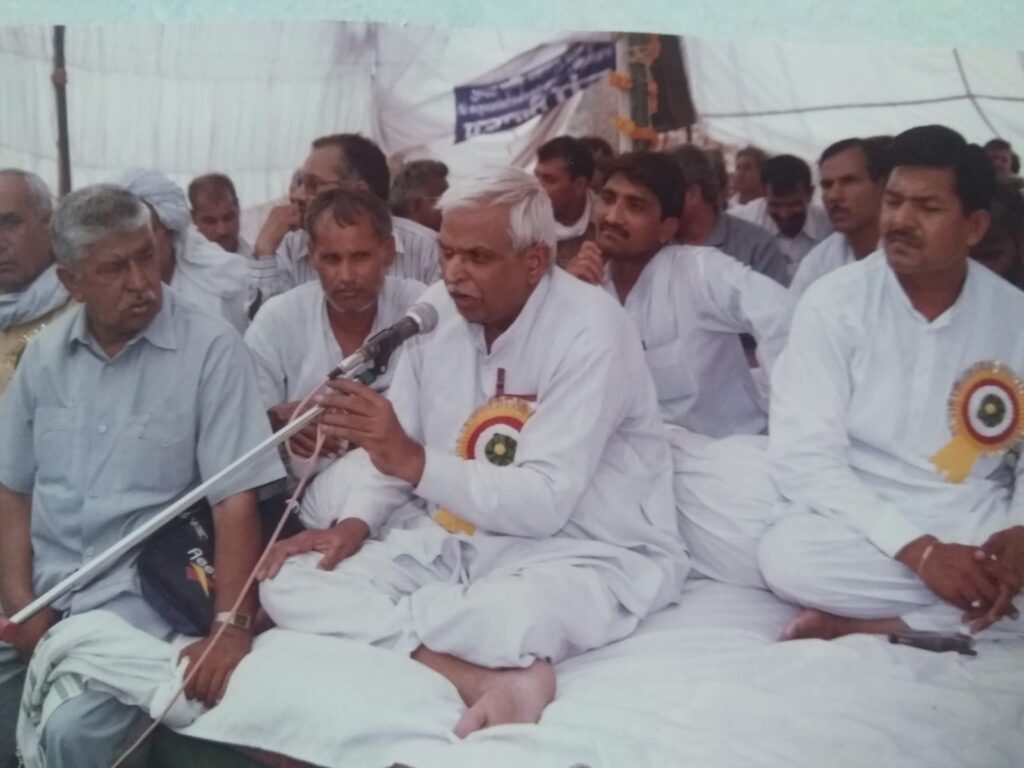
His friendships were characterized by selflessness, often sacrificing personal benefit to ensure the welfare of others. This vast generosity earned him admiration both in rural communities and within official circles, where his sincerity and accessibility were legendary.
Literary Contributions
Even amidst political turbulence and later physical disability, Parmannand’s literary voice flourished, becoming a medium for social reform and human empathy. His writing reflects his deep compassion and lifelong commitment to justice. Unlike literature that merely entertains, Parmannand’s work championed the cause of the oppressed, gave voice to marginalized communities, and presented a vision of an ideal society where equality, justice, and cooperation prevailed.
Major Published Works
Poetry Collections:
- Rasbhari
- Jaag Mitwa Jaag
- Andheron Ke Khilaf
- Shabdon Ka Kandeel
Story Collections:
- Makad Jaal
- Gaon Gohar Se
- Patjhad Ke Baad
Epic & Khand-Kavya:
- Purushottam
- Karn Charit
Novels:
- Ujdate Aalhne
- Taash Mahal
- Bhor Ka Tara
Other Publications:
- Geeta Gyaan Nichod
- Tidka Darpan (manuscript)
Awards and Recognition
- Vaidya Dhanram Panchal Sahitya Ratna Samman, 2007
- Uday Bhanu Hans Poetry Award, 2009
- Jay Shankar Prasad National Award, 2009
- Mahakavi Maithilisharan Gupt Award, 2009
His work has been the focus of academic research, with two Ph.D. dissertations and three M.Phil. theses completed across universities in India.
Philosophy and Life Outlook
Parmannand envisioned a society free of inequality, exploitation, and ignorance. His political and literary careers were guided by the same principles: service, integrity, and compassion. Even when his physical health was compromised after the accident in 1996, he continued to inspire society through literature, offering guidance to millions of farmers, laborers, and marginalized people.
His writing often portrayed:
- A society without hierarchical oppression
- Justice and human dignity as central values
- Cooperation, empathy, and perseverance as essential qualities
Prof. Parmannand’s life, marked by unwavering resilience, political integrity, social advocacy, and literary brilliance, remains a beacon of inspiration. His ability to transform adversity into opportunity and continue serving humanity through pen and action defines his enduring legacy.
Final Years and Legacy
On 22nd January 2013, Prof. Parmannand “Adhir” passed away, leaving behind a life that serves as a guiding light for future generations. His legacy endures not only through his political and social contributions but also through his vast literary corpus, which continues to inspire, educate, and awaken social consciousness.
He is remembered as an ideal teacher, principled politician, and eminent literary figure whose life reflected courage, integrity, and compassion. Scholars, social workers, and literary enthusiasts continue to study his work, ensuring that his vision of justice, human dignity, and societal progress remains alive.